Manila, Philippines
info@sportstek.ph

Technology
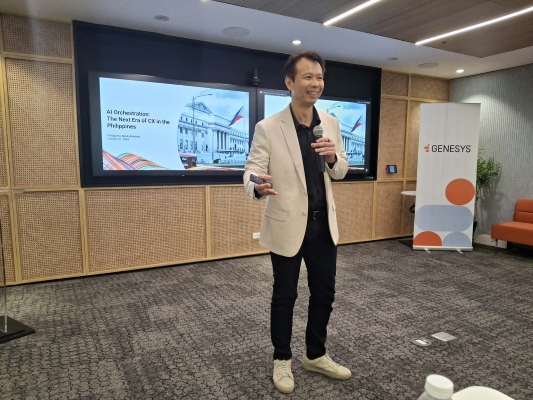
Philippines Accelerates Shift Toward AI-Powered Customer Experiences, Genesys Research Finds
64% of Filipino consumers feel more positive about AI-powered customer service - higher than APAC and Global averages
62% of Philippines CX leaders plan to use AI to augment CX employees, compared with 55% across APAC and 47% globally
MANILA, Philippines — Genesys®, a global leader in agentic orchestration for customer experience (CX), today released its Philippine findings from the fifth edition of its State of Customer Experience report. The findings reveal growing openness among Filipino consumers toward AI-powered customer service as expectations for faster, easier and more personalized experiences continue to rise.
Nearly 2/3rd (64%) of Filipino consumers say they feel more positive about AI-powered customer service than they did two years ago, compared with 56% of consumers across Asia Pacific (APAC) and 50% globally. Among Filipino respondents whose attitudes toward AI became more positive, 35% cited good experiences with AI-powered customer service as a reason for the shift.
At the same time, CX has become an increasingly decisive factor in consumer loyalty and spending across APAC. Poor service is hitting the bottom line: across APAC, 86% of consumers say poor customer service has caused them to spend less or stop doing business with a brand altogether. The impact is even more pronounced in the Philippines, where the figure rises to 91%.
The research found that consumers across APAC are optimistic about the impact AI will have on delivering better outcomes. 84% of the Philippines respondents expect AI to improve the quality and speed of customer service over the next 2-3 years, while 82% believe it will improve personalization - both above global averages.
Filipino consumers are similarly seeing practical benefits from AI-powered service. 78% say they do not particularly care whether an issue is resolved by a person or AI, as long as it is solved quickly and completely. In addition, 73% say virtual agents or chatbots have made it easier to solve issues themselves, while 85% believe AI will improve personalized customer service.
The opportunity for businesses extends beyond service efficiency. If assured a personalized customer service experience every time they interact with a company, 91% of Filipino consumers say they would be very or somewhat likely to recommend the company, 87% to make repeat purchases, 85% to purchase additional items, and 70% to pay a slightly higher price for products or services.
Philippine CX leaders are responding to these changing expectations, with 62% planning to employ AI-powered tools to assist and augment human agents, supervisors and other CX employees over the next two years. This is higher than the 55% of CX leaders across APAC and 47% globally who said the same, signalling stronger momentum among Philippine businesses to use AI to augment CX employees.
Beyond workforce augmentation, Philippine CX leaders are also looking toward more autonomous AI. Nearly half (49%) expect agentic or semi-autonomous AI to increasingly orchestrate customer experiences, with 37% expect autonomous AI agents to do so within three years, compared with 86% across APAC. This points to a growing interest in the Philippines in how AI can help coordinate interactions across customer journeys while also indicating that expectations around fully autonomous orchestration remain more measured than across the wider region.
Organizations are also planning to allocate resources to AI-powered CX. Philippine CX leaders expect to spend an average of approximately 32% of their customer service or experience budget on AI-powered CX technologies over the next 12 months.
As customer expectations rise and patience for poor experiences declines, organizations face growing pressure to use AI to strengthen customer relationships and improve service outcomes at scale. Meeting those expectations remains a challenge for many organizations. While 96% of APAC consumers find it important for information to be remembered across channels, nearly half (46%) of organizations do not automatically pass information between virtual and human agents. At the same time, managing data for AI, ensuring AI readiness, building technical capabilities and keeping pace with AI innovation are among their top challenges, making it harder to deliver connected customer experiences.
“Across Asia, customer expectations are evolving as AI becomes more embedded in everyday interactions,” said Mao Gen Foo, Vice President for Genesys Asia. “Customers increasingly expect organizations to understand their needs, maintain context and deliver seamless, personalized experiences. For businesses, the opportunity is to move beyond isolated AI automation toward agentic orchestration - coordinating AI, people, data and systems around customer intent. By doing so, organizations can move customers from intent to outcome faster, while combining the efficiency of AI with the empathy, expertise and judgment people bring to the moments that matter most.”
“Filipino consumers are becoming more open to AI, but their expectations for customer service are rising just as quickly. With poor experiences already influencing spending and loyalty, the message for businesses is clear: customer experience has a direct impact on loyalty and growth,” said Kulachart Ngernpermpoon, Genesys Country Manager for the Philippines, Thailand & Indo-China. “As AI adoption accelerates, success will depend on whether businesses can turn that investment into experiences that make a meaningful difference for Filipino customers.”
Key findings from the report include:
Filipino consumers are becoming more positive about AI-powered customer service. The Philippines shows a stronger positive shift in consumer sentiment than APAC and global averages, with good experiences helping improve perceptions of AI in customer service.
Personalization can influence loyalty and purchasing decisions. Filipino consumers place a premium on personalized service, with tailored experiences associated with stronger intent to recommend, purchase again and spend more.
Philippine CX leaders are looking to AI to augment employees. More local CX leaders plan to use AI-powered tools to support their CX workforce than their APAC and global counterparts.
Agentic AI is emerging as the next evolution of CX. Philippine CX leaders anticipate a growing role for agentic and semi-autonomous AI in orchestrating customer experiences.
AI is becoming a bigger CX investment priority. Philippine organizations plan to dedicate a significant portion of their CX budgets to AI-powered technologies over the next 12 months.
The findings point to a broader shift toward agentic orchestration, where AI, employees, data and systems work together with shared context to carry customer intent through to resolution.
Methodology: Genesys worked with an independent research firm to survey 5,811 consumers and 1,560 CX and business leaders in more than 20 countries. The study includes responses from 1,426 (24%) consumers and 508 (14%) CX leader respondents across Asia Pacific (APAC), including Australia, New Zealand, India, Japan, the Philippines, Singapore, South Korea, Thailand. The survey was conducted in March and April of 2026. Among the business respondents, the industries represented were airlines, automotive, banking, government, healthcare, insurance, manufacturing, media and entertainment, professional services, retail, travel and hospitality, technology, telecommunications and utilities.